You're Not Marketing a Room. You're Marketing a Feeling.
A guide to selling the experience rather than the space: what changes when you make the shift, and how reviews, photography, copy and your own team all play a part.
Every hotel marketer eventually hits the same wall. The building doesn't change week to week. The rooms look the same in January as they did in June. The restaurant menu shifts a little with the seasons, but the dining room itself is the dining room. And yet you're expected to post fresh, scroll-stopping content about it, day after day, month after month.
Product marketers don't have quite the same problem. A new trainer, a new phone, a new skincare serum, these lend themselves to unboxings, reviews and before-and-afters because there's something physical to hold up to the camera. Hospitality doesn't work that way. You're not selling an object. You're asking someone to imagine a feeling they haven't had yet, in a place they haven't been, based on fifteen seconds of video or a single photo.
That's the real job. Not "show the room", but make someone think: I want to spend my Saturday there. I want to bring my family. I need to experience that. Everything in this guide, your reviews, your photography, your copy, your own team, is really one job in five different disguises: helping a stranger feel something about a place they haven't been to yet.
Stop selling the space. Start selling the transformation.
Guests aren't booking four walls and a bed. They're booking anticipation, a break from routine, a version of themselves that gets to switch off for a weekend. The room, the pool, the breakfast spread, these are supporting details. The story is what the guest gets to feel and who they get to be while they're with you.
This is where a lot of hotel content falls flat. It photographs the product (the room, the view, the plate) instead of the transformation (the relief of arriving somewhere quiet, the joy of a family reunion, the small luxury of someone else making the coffee). Once you start asking "what feeling are we inviting people to experience" instead of "what are we selling", the brief changes for every channel at once, your website, your social content, your OTA descriptions, your email programme.
A useful gut check before you publish anything: would this make someone picture themselves there, or does it just show them a room they've already seen a hundred times online?
The rest of this guide is about where that shift actually shows up in practice. It touches on guest proof, visual identity, language, and the people and moments that keep the story honest. Each one has its own detail worth a proper look, which is why you'll find deeper guides linked throughout.
Let your guests do the convincing.
A stranger reading about your hotel trusts another guest's account of it far more than they trust yours, and for good reason. You have an obvious incentive to make the place sound wonderful. A guest who stayed there in March does not.
This is why reviews deserve to sit at the centre of your content strategy rather than at the edge of it, as a reputational chore to manage on a quiet Tuesday. I've written in detail about how to turn guest reviews into revenue, including the commercial case for taking them seriously and a full process for asking, responding and using what guests say. The short version for content purposes: every glowing review is a piece of proof you didn't have to write yourself, and every specific detail a guest mentions, the smell of fresh bread at breakfast, the walk they didn't expect to enjoy, the member of staff who remembered their name, is a content idea that's already been market-tested. You're not guessing what will resonate. A guest already told you.
Beyond formal reviews, the same principle applies to tagged posts, direct messages, and comments left on social content. Guests narrate their own experience constantly, often more vividly than any brief could produce. Reading it properly, rather than skimming for star ratings, is one of the lowest-cost, highest-quality research exercises available to any hotel marketer.
Show the feeling before you describe it.
Photography is usually the first place a potential guest meets your hotel, often before they've read a single word of copy. Which means it is also usually the first place the shift from product to experience either happens or doesn't.
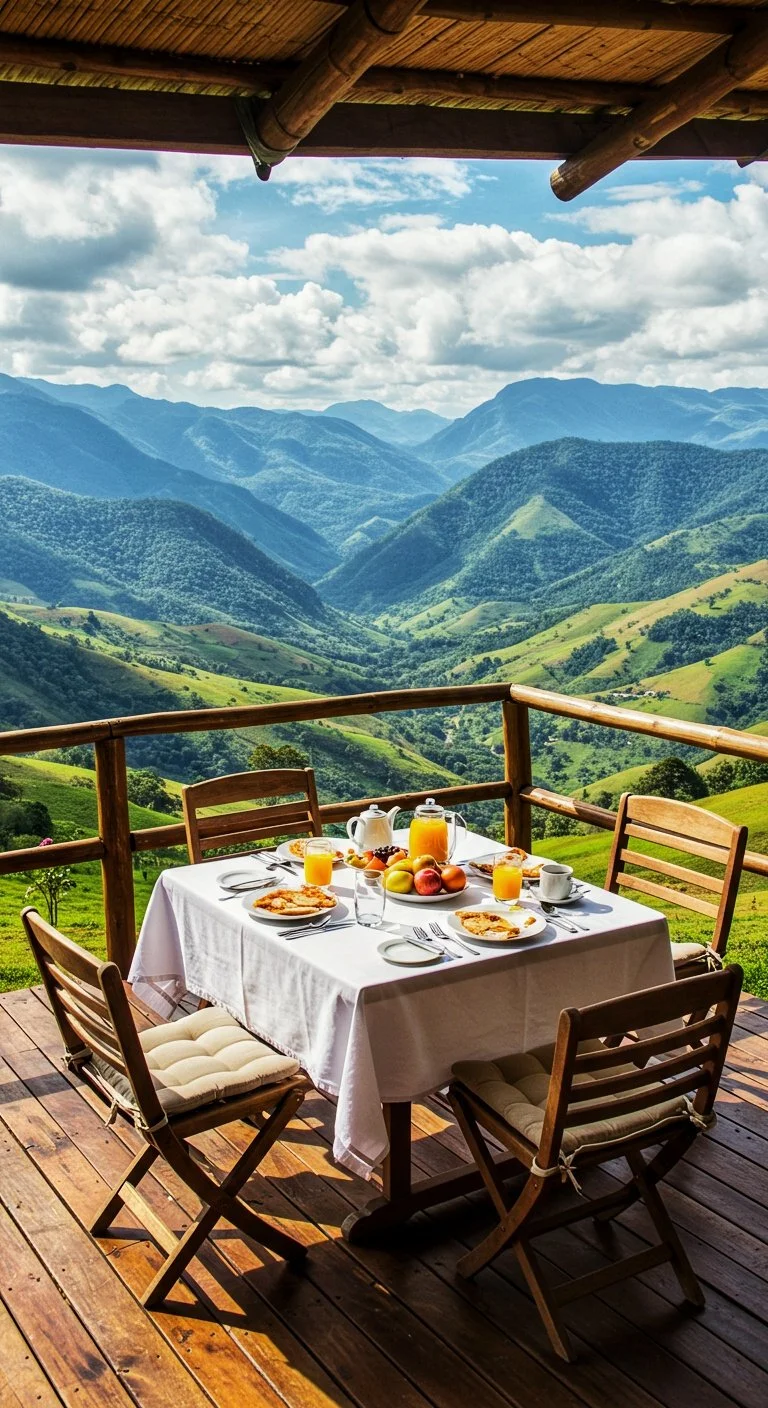
An empty, perfectly styled room says nothing about how it feels to be in it. A couple having breakfast in soft morning light on the terrace, a guest settled into a chair with a book, someone arriving and being greeted with real warmth, these say everything, without a single word of copy attached. I've written a full breakdown of why lifestyle photography converts better than static, empty-room shots, covering shot lists, briefing photographers properly, and the technical requirements for getting it right across your website, OTA listings and social channels.
The point worth carrying into everything else in this guide is simple: photography that shows a feeling rather than a floor plan sets the tone for every other channel. If your imagery is still doing the old job (documenting the space) while your copy is trying to do the new job (selling the feeling), the two will keep undermining each other.
Know whether you're informing or persuading.
Not every piece of hotel content is trying to do the same job, and treating it as though it is, is one of the quieter reasons content calendars run out of steam. A blog post about the best walking routes near your hotel is not trying to convert anyone on the spot. It's building trust and visibility, so that when someone is ready to book, you're already a name they recognise. A homepage hero line or an offer email is doing the opposite job: it needs to move someone to act, now.
I go into this distinction properly in Copywriting vs Content for Hotels, but the short version matters here because it explains why some of your "experience-led" content should read like a story and some of it needs to read like an invitation. Content tells. Copy sells. A guide that keeps blending the two into one flat, generic tone is usually the guide that stops converting, even when every individual sentence sounds fine.
Write like someone who has actually been there.
There's a real difference between describing a scene and putting someone inside it. "Beautiful sea views from the terrace" is looking at the experience from a distance. "The kind of morning where you forget your phone is even switched on" invites the reader to feel it. Sensory detail, sound, temperature, the small sensations of a place, does more work than another adjective-heavy description of the décor.
This is where structure earns its keep, because "write with more feeling" is not a brief anyone can actually work from. If you want a proper framework for building that feeling into copy deliberately rather than relying on instinct alone, these hotel copywriting frameworks walk through four proven structures (CLASS, AIDA, PAS and FAB) and when to use each one, along with real examples for luxury, lifestyle and serviced apartment tone of voice.
Mine your own team for material.
The people who see your hotel every single day often notice the small moments that matter most, precisely because they're not trying to. The receptionist who greets every returning guest by name. The chef who knows which regular orders the same dessert every visit. The housekeeper who spots when a couple has clearly come away to celebrate something. These aren't marketing observations, they're operational ones, which is exactly why they read as authentic rather than staged. Make a habit of asking your team what stood out to them this month, rather than waiting for it to surface in a guest satisfaction survey three weeks later.
Treat the calendar as your content engine.
The base experience might stay constant, but the additives around it never do. Changing seasons, fresh flowers on the terrace, a local festival, a new chef's special, a different crowd in the bar on a Friday night versus a Sunday afternoon. Each of these is a small variation on the same story, and each one is a legitimate reason to post again without repeating yourself. Your job isn't to invent new experiences every week. It's to notice which small, real thing has changed and build the content around that.
Build confidence before arrival.
Guests are deciding based entirely on trust, because they can't test-drive a hotel stay the way they can test a product in a shop. Content that helps someone feel sure of their choice before they've ever set foot through the door, honest photography, real guest voices, a clear sense of what a stay actually involves, builds that trust far more effectively than another polished, generic shot of the pool at golden hour. This is really where every thread in this guide meets: proof from guests, feeling in your images, clarity in your language, and the small human details your team notices, all working together so a stranger arrives already halfway convinced.
The takeaway.
Hospitality marketing will always be harder than product marketing in one specific way: there's rarely anything new to unbox. But that limitation is also the advantage, because it forces you toward the thing that actually converts, which is emotional relevance, not visual novelty. The hotels that keep their content feeling fresh aren't the ones with the biggest production budgets. They're the ones that keep listening to guests, to their own team and to whatever has quietly changed since the last post, then use reviews, photography and copy as three different ways of saying the same true thing about what it feels like to stay with them.
Do you need some help?
If your content feels like it's running on empty, that's usually a strategy gap rather than a creativity gap. My Hotel Visibility Audit looks at how your property is currently showing up, across reviews, photography, copy and beyond, and where the real opportunities are, starting from £1,500.
Frequently Asked Questions on Hotel Content Marketing.
-
There's no fixed rule, but consistency matters more than frequency. What changes week to week is rarely the building, it's the season, the guests, the events on your doorstep and the small operational moments your team notices. Build your content calendar around those shifts rather than trying to reinvent the property itself.
-
Start with your own reviews and guest-tagged posts. They're free, they're specific to your property, and they usually surface angles you'd never think to shoot yourself. A short conversation with your front desk or housekeeping team about what stood out that week is often just as valuable.
-
No, and trying to make every piece of content emotional is part of what causes fatigue. Some content genuinely needs to inform (opening hours, parking, how to get to you from the station), and forcing feeling into that is often what makes it read as insincere. Save the emotional weight for the content that's actually selling the stay, and let the practical content be clear and useful instead.
-
They work far better together. A guest review that mentions a specific detail, a view, a dish, a member of staff, is often a direct cue for what your next photoshoot or content piece should capture. Treating reviews and visual content as two separate workstreams usually means missing the easiest, most guest-validated ideas available to you.