Your Hotel Photography Is Costing You Bookings. Here Is How Lifestyle Content Fixes That.
There is a moment that happens thousands of times a day. A potential guest lands on your website, or scrolls through your OTA listing, or sees your property appear in a Google search. They look at your photography for a few seconds. Then they either stay, or they move on to your competitor.
Most hotels lose that moment and never know it.
Not because the rooms are not attractive. Not because the rates are wrong. But because the images show an empty room with perfectly aligned cushions and not a single reason to feel anything.
The travel industry has shifted. Guests do not book rooms anymore. They book experiences, feelings, versions of themselves they want to inhabit for a few days. And if your photography is not showing them that version, someone else's is.
This is the guide to fixing that. It covers the shift from static to lifestyle content, why it matters commercially, and every practical step you need to plan and execute a photoshoot that actually sells your property.
Part One: The Real Reason Guests Choose Your Competitor.
Scroll through any set of hotel OTA listings and you will see the same thing repeated. An empty bed. A bathroom shot. A lobby. A pool with no one in it. These images follow a formula that made sense when photography was primarily about informing guests of what a room looked like. That era is over.
Today, a guest browsing for a stay is not asking: what does this room look like? They are asking: what will it feel like to be there? Those are entirely different questions, and they require entirely different answers.
The scroll-stopping problem.
The average person scrolling through a hotel feed or OTA gallery makes a decision within seconds. That decision is not rational. It is emotional. It is instinctive. Before they look at price, before they check reviews, they have already felt something about your property. Or they have not.
Static photography of empty spaces produces no emotional response. It answers a functional question (yes, there is a desk, yes the bathroom has a rainfall shower) but it does not make anyone feel anything. And in a market where dozens of properties are competing for the same night, the one that makes the guest feel the most wins.
What lifestyle content does differently.
Lifestyle photography places real, relatable people inside the experience your hotel offers. Not posed, stiff, corporate imagery. Authentic-feeling moments that allow potential guests to see themselves in the scene.
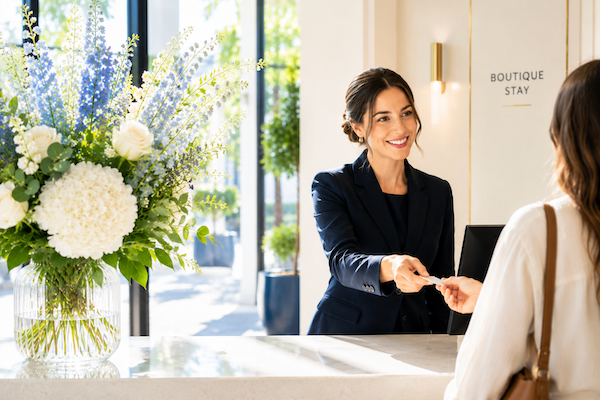
A couple having breakfast on the terrace with morning light across the table. A solo traveller settling into a reading chair with a glass of wine. A family by the pool, children in the water, parents actually relaxed. A guest arriving and being greeted with warmth and ease.
These images do something that an empty room cannot: they tell the guest what it will feel like to choose your property. That emotional bridge is what turns a browser into a booker.
This is really one piece of a wider shift in hospitality marketing, away from selling the space and toward selling the feeling.

THE COMMERCIAL CASE
Lifestyle photography does not just improve how your property looks. It sharpens how it is perceived. When your images speak directly to the guests you most want to attract, your positioning becomes more precise, your messaging becomes more consistent, and every marketing channel you run works harder as a result. A guest who already sees themselves in your property before they book is not comparing you on price. They have already decided. That is the compounding effect of getting your visual identity right: it does not just convert one booking, it amplifies everything else you are doing.
When did you last do a proper lifestyle photoshoot?
This is worth asking directly. Not just a refresh of room types after a renovation. A proper shoot, with models, props, natural light and a planned narrative of the guest experience.
If the honest answer is more than 12 months ago, your photography is already working against you. The hospitality market moves quickly. Guest expectations of what a hotel should look like visually have risen significantly in the last two years, driven by social media, by boutique brands raising the bar, and by a generation of travellers who judge visual credibility instantly.
If it has been more than 18 to 24 months, the gap between your imagery and your competitor's is likely visible to every guest who compares you side by side.
I would genuinely like to know: how often does your property update its content library? Share it in the comments below. The answers are always revealing.
Part Two: Planning a Hotel Photoshoot That Sells the Experience.
A lifestyle-led photoshoot requires more planning than a standard room shoot. You are not just documenting a space. You are directing a narrative. Every shot should have a purpose, an emotion, a guest type in mind.
Start with your guest, not your rooms.
Before you write a shot list, define who you are shooting for. Your photography has to resonate with the guests who are most valuable to your business, whether that is couples looking for a weekend away, business travellers who need reassurance of functionality and calm, families who need to know there is space and ease, or long-stay guests who want to feel at home.
Every image you create should answer the question that specific guest is silently asking when they look at your listing.
Build a visual moodboard before you brief anyone.
Use Pinterest, Canva or Milanote to collect references. Not just rooms you like. Mood, tone, colour palette, light quality, the feeling you want guests to have when they see your images.
Ask yourself: does this moodboard reflect our brand promise? A coastal boutique hotel and a city business hotel should have entirely different visual languages. Your moodboard is the single document that aligns everyone, from the photographer to the props stylist to the model agency.
Build a strategic shot list.
Break down your shoot across every area of the property, but frame each shot in terms of the guest moment it depicts, not just the space it shows.
Rooms: not just the bed made perfectly, but a guest reading in bed with morning light coming through the curtains, a coffee tray styled on the nightstand, a robe draped naturally
Bathrooms: the rainfall shower running, candles lit, a folded towel and a glass of wine on the edge of the bath
Common areas: the lobby as it feels at 8am, quiet and calm, with a guest checking out or a receptionist in natural conversation
Food and beverage: the moment a plate arrives, the warmth of a cocktail being built at the bar, breakfast laid out with a view behind it
Exterior: the hotel entrance as a guest would experience it on arrival, the surrounding neighbourhood, the local cafe two minutes away
Amenity moments: spa rituals with a visible sense of calm, a poolside scene that looks inhabited and alive, a coworking space that feels productive
Landscape and portrait formats for every major scene: portrait for social and mobile, landscape for website, OTAs and press.
Choosing the Right Photographer.
The most common mistake independent hotels make is booking a photographer they like rather than one who understands the commercial purpose of hospitality imagery. A gifted architectural photographer or a talented wedding photographer is not the same as a hospitality photographer with a commercial mindset.
Your photographer needs to understand the difference between a beautiful image and a converting image. In most cases, the brief is to achieve both. But conversion must drive every decision.
What to look for.
A portfolio that includes real hotel, resort and serviced apartment work, not just domestic interiors.
Evidence of lifestyle shooting: models, natural scenes, human moments alongside architectural images.
Natural light capability and a light touch in post-production. Heavy editing ages quickly and rarely looks credible.
Comfort shooting both vertical and horizontal formats. Any photographer who only delivers landscape is thinking about websites, not social or mobile.
Understanding of OTA image requirements and web optimisation.
Questions to ask before you book.
Can I see examples of full hotel shoots, not just selected highlights?
Do you deliver both high-resolution files and web-optimised versions?
What are your usage rights and licence terms? Are they unlimited and channel-agnostic?
Have you worked with a model agency before, or do you bring your own talent connections?
Can you provide references from hospitality clients?
Licensing, Copyright and Usage Rights.
This section does not get enough attention and it costs hotels money when they overlook it.
Every image created in a commercial photoshoot is subject to licensing terms. Without the right agreements in place, you may find yourself unable to use images in paid media, unable to update your OTA listing, or facing a request for additional fees to extend usage.
Before the shoot is confirmed, establish the following in writing:
Full commercial usage rights across all channels: website, OTAs, paid media, social, print and PR.
Unlimited duration unless a specific renewal agreement is mutually agreed.
Delivery in both high-resolution (300dpi minimum) and web-optimised formats.
No watermarks, platform restrictions or exclusivity clauses that limit where you can publish.
If a photographer proposes to retain rights for portfolio or editorial use, that is standard and acceptable. What is not acceptable is discovering post-shoot that your licence for paid media requires a separate fee.
Working with Models: Why It Matters and How to Get It Right.
Lifestyle photography only works when the people in it look like the guests you want to attract.
This is not about aesthetics. It is about aspiration and recognition. When a 45-year-old couple planning a weekend away sees your images, they need to see people who look like them, living the experience you offer. When a business traveller browses your website at 11pm, the solo figure in your lounge image needs to feel familiar and appealing, not generic.
Use models that match your guest personas.
Work with a model agency that can supply talent matched to your target demographic. Brief the agency on age range, style, energy and context. A family-friendly coastal hotel and an adults-only boutique property need entirely different casting.
Why staff are rarely the right choice.
Using your own team can feel practical and cost-effective. In most cases, it is neither. Staff rarely match your guest persona. They may feel uncomfortable in front of a camera, which reads in every image. And if they leave, you face complications around continued use of those images.
There are exceptions. A front-of-house team member being naturally welcoming at check-in, or a chef photographed from behind in action, can work well. But for any scene requiring a model to carry emotional weight, invest in professional talent.
Talent release forms are non-negotiable.
Anyone visibly recognisable in any image must sign a talent release form before the shoot. This grants you permission to use their likeness commercially. Keep every signed form on file. Without them, you cannot use the images and cannot defend their use if challenged.
What to Include in a Hotel Photography Shoot.
The shot list below retains every area from a standard hotel shoot but frames each through the lens of lifestyle and emotional storytelling.
Rooms and bathrooms.
Minimum four images per room type. At least one bathroom image per room.
Styled scenes over empty rooms wherever possible: a coffee tray, a book on the nightstand, a robe draped naturally.
Show the functional details guests need to see: power sockets, desk space, wardrobes, mini fridge. But frame them as part of a lived-in scene, not a product catalogue.
Open curtains, warm lamps, fresh linen, no clutter.
Common areas.
Lobby and reception as it feels at key moments in the guest day, not staged empty at 3am.
Lounge, coworking space, pool and spa captured with people inhabiting them naturally.
Set a laptop at the coworking desk, place a book and glasses by the pool, arrange a towel and a drink at the spa.
For OTA images specifically: people in frame can create approval complications. Shoot versions with and without models for flexible usage.
Food and beverage.
Dishes arriving at the table, cocktails being built, breakfast laid out with a view or a scene behind it.
Atmosphere: the light, the setting, the feeling of the room, not just the food itself.
Barista hands, chef action from behind, a guest lifting a glass: gesture over face where model releases are not in place.
Exterior and location.
The hotel entrance as a guest experiences it on arrival. Clear, welcoming, in context.
A wide shot that places the building in its surroundings.
Key elements of the neighbourhood: the cafe next door, the garden, the view from the street, the route guests will walk.
Avoid clutter: parked cars, signage, passers-by who have not signed releases.
OTA Photography Requirements.
Meeting platform technical requirements is separate from creating great imagery, but both matter. You can shoot beautifully and still lose OTA ranking if your images do not meet specification.
Booking.com
At least 24 high-quality images per listing.
Minimum four images per room type.
At least one bathroom image per room.
Photograph all unit types if you are a serviced apartment or aparthotel.
Include exterior, all amenities, common areas and location context.
All of the above helps boost your OTA ranking and improves conversion. But image quality is only one part of the picture. Understanding how OTAs actually rank your listing puts those image standards in the context of a wider distribution strategy.
Technical specifications (applicable across most major OTAs).
Landscape orientation preferred for OTA listing images.
Minimum resolution: 2048 x 1080px. Ideal: 4000 x 3000px.
Camera height: 100 to 160cm.
Natural light preferred. Avoid heavy editing, filters or collage formats.
No logos, reflections, visible watermarks or embedded text.
No people in OTA-specific images unless professionally model-released (lifestyle versions go to website and social; clean versions go to OTA).
Meeting these criteria improves your OTA ranking and your conversion rate on platform. Do not underestimate the second point. Better images on OTAs convert more guests, and those guests often return direct next time.
Props, Styling and Scene Setting.
Props are the difference between a room that looks clean and a room that feels inviting. They are visual shorthand for the experience you offer. A book on a nightstand signals rest. A half-finished glass of wine on a terrace table signals pleasure. A laptop open in a well-lit corner signals productive calm.
Every prop should be chosen to reinforce a specific feeling, and every feeling should connect back to a guest persona and their reason for booking.
In-room styling.
A book on the nightstand or a newspaper folded on the desk.
Fresh coffee on a tray with a small biscuit or pastry alongside it.
A robe placed naturally on the bed or the back of a chair, not folded flat.
Fresh flowers: one colour, simple, seasonal. Not a formal arrangement. One stem or a small bunch in a clear vase.
Plump cushions, natural linen, a throw folded at the end of the bed.
Food and beverage.
Croissants on a ceramic plate, juice in a carafe, fresh fruit arranged simply.
A cocktail being poured or wine and two glasses set ready.
Avoid plastic packaging, brand-visible wrappers or anything that looks like a stock image.
Amenities and experience areas.
Towels and a book arranged by the pool with a cold drink nearby.
Yoga mats laid out with intention, candles lit in the spa area.
A laptop open with a coffee cup alongside it in the coworking or lounge space.
All props must align with your brand personality. A minimalist urban hotel and a country house should have entirely different prop palettes. Curate accordingly, and check everything in frame before the shutter opens.
How to Brief Your Photographer.
A photographer without a brief will shoot what looks good to them. A photographer with a strong brief will shoot what converts for you. The brief is the most important document you produce before a shoot.
Your brief should include:
Your brand tone of voice and the emotional territory you want the imagery to occupy.
Your target guest personas and what each type needs to feel when they see your images.
A mood board with specific visual references for tone, colour and feeling, not just composition.
The full shot list, broken down by room type, area, scene and format.
Model requirements: number, demographic, wardrobe direction, any specific scenarios.
Image format requirements: portrait and landscape for every major scene.
File delivery specification: high-resolution and web-optimised, naming convention, folder structure.
Channel usage context: which images are for website, which for OTA, which for social and paid.
Shoot Day: Plan It Like an Opening.
A poorly organised shoot day is expensive in every sense. Delays mean fewer completed shots. Rushed styling means images that do not meet the brief. Rooms that are not ready mean a photographer standing still while your team scrambles.
Treat the shoot day with the same operational rigour you apply to a major event or a hotel opening.
Before the shoot begins.
Walk the property with the photographer the evening before or first thing on the day. Agree every angle and confirm lighting before models arrive.
Block every room you need for the full shoot period. Do not leave this until the week before.
Prepare all props in advance: washed, pressed, styled and ready to be placed.
Print or share a digital shot list everyone can check off as you go.
On the day.
Assign one team member whose only role is to manage the shot list and keep the shoot on schedule.
Have housekeeping on standby for resets between shots: fresh towels, re-made beds, cleared surfaces.
Have maintenance available for any lighting or fixture issues that only become visible under a camera.
For food and beverage shots: brief the kitchen team in advance so dishes are ready at the right moment.
Scheduling advice.
Aim for late spring or summer for outdoor and natural light scenes if you can plan ahead.
Winter or atmospheric properties: lean into your season rather than fighting it. Candles, fires, low warm light tell a story too.
Avoid scheduling on high-occupancy days. Occupied rooms that need turning between shots lose you an hour or more across a full day.
Match Your Images to Your Guest Segments.
One of the most overlooked aspects of hotel photography is segmentation. Every image in your library should be traceable back to a specific guest type and what they need to feel when they see it.
Business travellers: clean desk set-up, visible power access, express breakfast, calm lighting that signals productive focus.
Couples and leisure guests: intimate dining, a terrace or view scene, the bath styled for a soak, evening atmosphere in the bar.
Families: connecting rooms, a pool scene with life and energy, accessible dining, open space.
Wellness seekers: spa rituals, morning light in a quiet room, yoga or movement spaces, the quality of calm.
Long-stay and extended stay guests: kitchenette in use, wardrobes with space, a laundry area, the feeling of being comfortable over time rather than just one night.
Events and celebrations: ceremony or function space set up with intention, golden hour lighting, table settings, the moment before guests arrive.
Each image is silently answering the guest's unspoken question: is this place for me?
What Strong Photography Delivers.
From working across independent hotels, serviced apartments and character stays, here is what consistently follows a well-planned, lifestyle-led photoshoot:
Booking conversion improvements of 15 to 25% (sometime even more) on direct channel.
Improved OTA ranking and visibility, driven by higher image scores and engagement.
Reduced bounce rate on the hotel website, as guests spend longer exploring.
Rate integrity support: strong visual presentation allows you to defend price against OTA comparison pressure.
More organic social media reach and resharing, because lifestyle content performs where static imagery does not.
A stronger base for PR and media outreach: journalists and influencers respond to editorial-quality imagery.
More effective paid media: lifestyle imagery consistently outperforms static shots in click-through and return on ad spend.
RATE INTEGRITY NOTE
Hotels that invest in strong visual positioning are able to hold rate more effectively against OTA comparison pressure. When a guest can see, feel and imagine your property, they are less likely to look for a cheaper alternative. Photography is not a marketing cost, it is a rate protection tool.
SEO and Web Performance for Hotel Photography.
Creating strong imagery is half the work. How you publish and manage those images affects both your search visibility and your website performance.
Rename every file before upload using descriptive, keyword-rich naming: deluxe-double-room-sea-view-hotel-cornwall.jpg, not IMG_4421.jpg.
Write descriptive alt text for every image on your website: include the room type, feature and location.
Compress all images before upload even if they are already in web format. Target under 500kb per image to protect page load speed.
Organise your image library by type, usage and channel. Know exactly which images are on your website, your OTA listings, your social feeds and your press pack.
Use the same core image library consistently across all distribution channels. Consistency of visual identity builds brand recognition. A guest who first sees you on Booking.com should recognise you instantly when they land on your website.
AI-powered search tools are increasingly using image metadata and alt text as signals. Every correctly named and tagged image is a visibility asset.
Use the same images across all distribution channels from your website to OTAs, third party portals such as TripAdvisor, social media and PR. This ensures a consistent and cohesive brand message at every touchpoint. This is especially important for your Google Business Profile where fresh, correctly formatted photography directly influences how prominently your listing appears in local search and map results.
Final Photography Checklist.
Define your guest personas and what each needs to feel from your imagery.
Build a visual moodboard before you brief anyone.
Choose a hospitality photographer with a commercial understanding of conversion, not just aesthetics.
Confirm unlimited usage rights in writing before any work begins.
Write a full brief: tone, personas, mood board, shot list, format requirements.
Cast models matched to your target demographic and get talent release forms signed before the shoot.
Block rooms and prepare all props and styling in advance.
Capture both portrait and landscape formats for every major scene.
Create lifestyle versions and clean versions where OTA requirements differ from website and social.
Rename, compress, tag and organise your image library before publishing anything.
Schedule your next refresh. If it has been 12 months, it is already time.

Ready to Review What Your Photography Is Actually Doing for Your Property?
Your photography is either building the case for your hotel or quietly losing the comparison every time a guest looks at your listing. If you are not sure which, the Hotel Visibility Audit is the right starting point.
The Visibility Audit reviews your website, OTA listings and visual positioning and gives you a clear, prioritised action plan to improve what guests see and feel before they book. Photography and content library are part of that review.
If you already know the problem and want to move straight to strategy and execution, get in touch and we can discuss the right level of support for your property.
Frequently Asked Questions About Hotel Photography.
-
Every 12 to 18 months as a baseline. After any renovation, rebrand or significant change to the property, immediately. Seasonally where your property has a strong seasonal identity and the scenes you need to sell change significantly. If your content library is more than two years old and you have not updated it, guests who are comparing you side by side with competitors are likely noticing.
-
Standard hotel photography documents a space: a made bed, an empty bathroom, a pool at dawn with no one in it. Lifestyle photography tells the story of what it feels like to be there: a couple at breakfast on the terrace, a guest settled into a reading chair with the evening light behind them. The practical information is still present, but the emotional context is what stops the scroll and triggers the decision to book.
-
Occasionally and in specific circumstances, yes. A receptionist in a natural welcome moment or a chef in action photographed from behind can work well. For any scene that requires carrying emotional weight, such as a couple at dinner, a guest relaxing in a room or a family by the pool, professional models matched to your guest demographic will always produce stronger results. Always get talent release forms signed by anyone visibly recognisable.
-
At least 24 high-quality images per listing. Booking.com specifies a minimum of four images per room type and at least one bathroom image per room type. Include exterior shots, all amenities, common areas and location context. Landscape format is preferred by most OTAs. People should not appear in OTA-specific images unless they are professionally model-released.
-
Both high-resolution files (300dpi minimum, for print and PR) and web-optimised versions (under 500kb, for website and OTA upload). Portrait and landscape versions of every major scene. Full commercial usage rights with no channel restrictions confirmed in writing before the shoot begins.
-
The images you use on your OTA listing and your own website serve different purposes and have different requirements. OTAs typically require clean, people-free images to avoid approval complications. Your direct website and social channels are where lifestyle content does its most powerful work, stopping the scroll and building emotional connection. Plan your shoot to deliver both: lifestyle versions for owned channels and clean architectural versions for OTA distribution.